Choosing the Right Industrial Automation Solutions for Your Factory
Factories rarely struggle because they lack ambition. More often, they struggle because equipment, people, and information do not move at the same pace. One line can run well on paper and still miss output targets because changeovers drag on, a bottleneck starves the next station, or a packaging cell stops PLC programming three times a shift for reasons nobody fully documents. That is where industrial automation starts to matter, not as a buzzword, but as a practical way to reduce friction in daily operations.
The hard part is not deciding whether automation has value. Most manufacturers already know that. The hard part is choosing the right industrial automation solutions for a real plant with real constraints, including legacy machines, maintenance gaps, operator training needs, quality requirements, safety obligations, and budgets that never stretch as far as the wish list. I have seen factories buy impressive technology that did very little because it solved the wrong problem. I have also seen modest automation projects pay for themselves quickly because they were aimed at a stubborn source of waste.
Choosing well requires judgment. It means looking past sales presentations and asking what your factory actually needs to run better, safer, and more predictably.
Start with the constraint, not the technology
A common mistake in manufacturing automation is beginning with the tool. A plant hears about robotics, machine vision, automated guided vehicles, or advanced SCADA platforms, then starts searching for a place to apply them. That approach often leads to expensive islands of capability with weak return.
A better starting point is the operational constraint that repeatedly costs you money. In one food processing plant, management initially believed they needed a robotic palletizing upgrade because labor turnover was high at the end of the line. After a closer review, the larger loss came from inconsistent upstream fill weights and frequent stops caused by product accumulation. The palletizer was visible, but it was not the main problem. The better investment was line control integration, sensor upgrades, and a few mechanical improvements that stabilized flow. Only after those issues were fixed did automated palletizing make financial sense.
This pattern shows up everywhere. A fabrication shop may think it needs more machine automation when the real issue is poor scheduling and no reliable production data. A packaging facility may want a full factory automation overhaul when its most urgent need is automated reject verification to reduce quality escapes. Industrial automation works best when it is anchored to a measurable bottleneck.
That means your first questions should be blunt. Where are we losing throughput? Which downtime events happen every week? What tasks create repetitive strain or safety risk? Where does scrap originate? Which decisions are still based on guesswork because data arrives too late or not at all? Those answers will tell you far more than a catalog of automation systems.
What “right” looks like in an industrial setting
The best automation decision is not always the most advanced option. It is the one that fits production reality.
In practical terms, the right solution usually improves at least one of five outcomes: throughput, quality, labor efficiency, safety, or traceability. Ideally it improves several at once. A vision inspection system, for example, may reduce defects, provide better process feedback, and create electronic records for customer audits. A simple conveyor interlock strategy may improve throughput and reduce jams without requiring a large capital project. A new PLC and HMI standard may shorten troubleshooting time across an entire department.
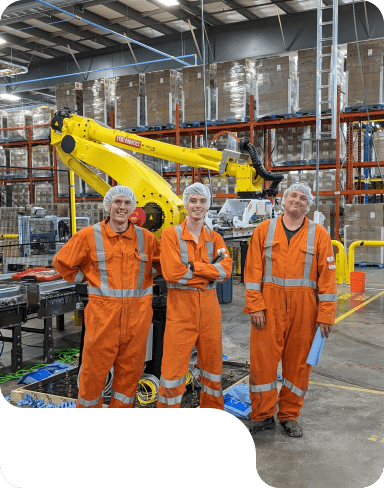
Fit also matters at the plant level. A highly customized solution can perform beautifully and still become a maintenance burden if only one programmer understands it. A low-cost retrofit can disappoint if it cannot survive washdown conditions, vibration, dust, or temperature swings. An ambitious manufacturing automation project can stall if operations and engineering cannot support commissioning around production schedules.
I usually look for a solution that is technically appropriate, maintainable by the site team, scalable if the process grows, and simple enough that operators trust it. If the system makes daily work harder, people will work around it, and once that happens, the expected return starts leaking away.
The first site assessment should be unglamorous
Before selecting vendors or platforms, spend time on the floor. Not in a conference room, not in a software demo, and not only with management. Walk the line during normal production, during startup, and if possible during a shift when things tend to go wrong. The details you pick up there will shape better decisions than any brochure.
Watch how materials move. Notice where operators pause, where forklifts wait, where product stacks up, where someone has to improvise because the machine sequence is awkward. Listen to maintenance technicians explain recurring faults. Ask operators which alarms they ignore because they are too frequent or too vague. Look at changeovers, not just steady-state operation. Plenty of automation systems look efficient at full run speed but create headaches when product mix changes every few hours.

One automotive supplier I visited had a semi-automated assembly cell with respectable cycle time but terrible uptime. The root problem was not the robot or the PLC. It was tooling variation and poor sensor placement. The cell was technically automated already, yet it needed better engineering discipline, not simply more hardware. That is an important distinction. Factory automation is not just a matter of adding devices. It is the design of a reliable operating system for production.
Where industrial automation usually delivers the strongest returns
Some applications consistently make sense because they target repetitive losses that add up fast over a year. The exact ranking depends on your process, but certain categories deserve close attention in most factories.
- Repetitive manual handling that creates labor shortages, ergonomic risk, or unstable cycle times
- Inspection steps where defects are hard to catch consistently by eye
- Processes with frequent minor stops caused by poor machine coordination
- Data collection that still depends on clipboards, spreadsheets, or delayed manual entry
- Changeovers or recipes that rely too heavily on tribal knowledge
These are not universal rules, but they are reliable starting points. In many plants, the quickest returns come from better controls, instrumentation, and data visibility rather than a dramatic mechanical overhaul. I have seen simple downtime tracking, recipe management, and line balancing produce larger gains than more expensive robot projects. That does not make robotics less valuable. It just means sequencing matters.
Matching the solution to the maturity of the plant
Not every factory is ready for the same level of automation. That is not a criticism. It is simply reality.
A plant with inconsistent preventive maintenance, limited controls expertise, and no standard spare parts strategy may struggle with complex, highly integrated automation systems. Even if the technology works during acceptance testing, long-term performance can fall apart when no one on site can diagnose failures quickly. In that environment, simpler and more robust industrial automation solutions are often the better choice.
On the other hand, a site with strong engineering support, disciplined change management, and clear production standards can benefit from deeper integration. It may be ready for plant-wide historian data, advanced OEE tracking, coordinated line control, servo-driven precision stations, or robot cells tied into MES and quality systems.
Think of automation maturity like a staircase. If your first step is too high, people trip over it. The right path may begin with standardizing PLC platforms, cleaning up electrical panels, replacing obsolete drives, and improving HMI usability. Those are not flashy projects, but they often create the foundation that later automation depends on.
Integration matters more than most buyers expect
A machine can perform exactly as specified and still underdeliver because it does not connect well with the rest of the operation. This is one of the most common gaps in factory automation projects.
Integration happens at several levels. There is physical integration, meaning product enters and exits the process cleanly. There is controls integration, meaning machines share status, permissives, and fault logic in a sensible way. There is information integration, meaning data flows to the systems that need it, whether that is quality, maintenance, scheduling, or management reporting. Then there is human integration, which is often overlooked. Operators and technicians need screens, alarms, and procedures that make sense under pressure.
I worked with a plant that bought a high-speed case packing system from a reputable OEM. On standalone tests, it was excellent. Once installed, however, the upstream line could not feed it consistently and the downstream palletizing area could not absorb its bursts. The result was disappointing line efficiency, not because the machine was bad, but because the process around it was unprepared. Good automation systems need a good neighborhood.
When evaluating solutions, ask detailed questions about interfaces. Which protocols are supported? How will fault states be coordinated? What data points will be available? Can recipe changes be managed centrally? How will the system behave during upstream starvation or downstream blockage? Those details separate a productive investment from a frustrating one.
Vendor selection is really risk selection
Manufacturers often compare proposals by capital cost first. That is understandable, but incomplete. When you choose a vendor for industrial automation, you are choosing a package of technical design, project management quality, service responsiveness, documentation standards, training strength, and future support. Price matters, but so does the cost of poor execution.
A lower initial quote can become expensive if commissioning drags on for weeks, if spare parts are hard to source, or if the code is so opaque that every small change requires outside help. By contrast, a higher-priced vendor may deliver better long-term value if their automation systems are standardized, well documented, and easier for your team to maintain.
Reference checks help, but ask specific questions. Did the vendor hit the startup schedule? How were punch list items handled? Was the line stable after six months, not just on day one? Did training prepare operators and maintenance staff, or did the plant learn by trial and error? Were manuals complete and usable? Those questions reveal maturity.
It is also wise to review who will actually execute the project. The sales engineer is not always the controls programmer, and the project manager you meet early may not be the one handling site issues during installation. In complex manufacturing automation work, the individual team members matter.
Calculate return with more honesty
Return on investment models often look too neat. Real factories are messier. If you want a credible business case, include the benefits that matter, but also include the costs and risks that are easy to ignore.
Labor savings are the most obvious line item, but they are not always straightforward. If a process is hard to staff, reducing labor dependence has real value even if headcount is not immediately cut. Quality improvements can be significant, especially where customer complaints, rework, or scrap are costly. Throughput gains matter, but only if upstream and downstream constraints allow you to realize them. Safety improvements may not show up as direct payback in the same way, yet they deserve weight in decision-making.
On the cost side, include installation downtime, guarding, electrical work, compressed air demand, network upgrades, training hours, spare parts, and support contracts. Some plants underestimate the internal time required from engineering, production, IT, quality, and maintenance. That time is not free.
A realistic payback range is often more useful than a single precise number. For many industrial automation projects, a payback somewhere between 12 and 36 months can be sensible, depending on process criticality and strategic value. But there are exceptions. A compliance-driven traceability system may not have a short direct payback and still be the right move. A safety-related upgrade may be non-negotiable.
Do not neglect the operator experience
The people who live with the system every shift will determine whether it succeeds. I have seen technically elegant automation fail because the HMI was cluttered, alarms were cryptic, or manual recovery steps were so awkward that operators bypassed them.
Operator involvement during design is one of the simplest ways to improve outcomes. They can tell you where jams actually occur, which adjustments are made most often, and which current workarounds are keeping production afloat. That knowledge is practical and often missing from early engineering assumptions.
A good operator interface is not fancy. It is clear. It shows machine state plainly, presents alarms with useful guidance, and supports common tasks without unnecessary navigation. If your automation systems require a laptop and a specialist for every small adjustment, you are building dependence where you probably want resilience.
Training also matters more than the sign-off sheet suggests. Effective training happens in context, on the actual equipment, across multiple shifts, with attention to startup, normal operation, jams, faults, and changeovers. Plants that treat training as a formality usually pay for it later in downtime.
Safety and compliance should shape design from the start
Automation changes risk. Sometimes it reduces exposure to manual lifting, pinch points, or repetitive motion. Sometimes it introduces new hazards related to motion, energy isolation, guarding access, or human-robot interaction. The right industrial automation solutions account for both.
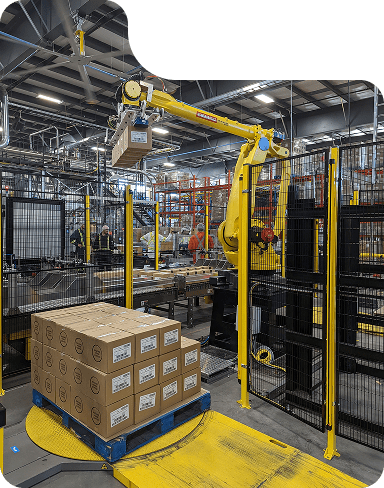
Safety cannot be bolted on at the end. Guarding, interlocks, safe speed, safe torque off, e-stops, lockout points, and access procedures should be considered early in the design process. If you wait until late-stage installation, you often get awkward compromises that frustrate operators and invite bypass behavior.
The same applies to compliance and traceability. In regulated sectors such as food, beverage, pharmaceuticals, and certain automotive environments, data integrity and validation requirements can affect system architecture. Recipe control, batch records, user access levels, audit trails, and electronic signatures may not be optional. These are not side features. They are part of the operational requirement.
Plan for maintenance on day two, not just startup day
Most automation projects are celebrated at startup. The better ones are judged six months later.
Maintainability deserves more attention than it usually gets during purchasing. Ask whether components are standard for your site. Review spare parts strategy. Ensure electrical drawings, IO lists, network architecture, and program backups are complete and stored properly. Confirm that troubleshooting screens show meaningful diagnostics rather than generic fault text. Clarify who owns software changes after handoff.
One plant manager told me that his biggest regret in a large automation upgrade was not the budget overrun. It was accepting a system that no one in-house felt comfortable touching. Every sensor issue turned into a service call. Every process change became a mini-project. The line was productive when healthy, but fragile when anything drifted.
That is avoidable. Automation should reduce dependence on heroics, not create a new kind.
A practical path for evaluating options
When a factory has multiple competing automation ideas, it helps to use a disciplined screen. Not a rigid formula, but a consistent way to sort what should happen now, later, or not at all.
- Define the business problem in one sentence, with a measurable baseline
- Identify process constraints, integration needs, and site capability gaps
- Compare solutions on total cost, maintainability, scalability, and operational impact
- Run a realistic implementation plan, including downtime, training, and support needs
- Approve only when the expected benefit remains strong after those realities are included
This approach sounds simple because it is. The discipline lies in resisting the urge to rush. Plants under pressure sometimes greenlight automation because something must be done quickly. Speed has value, but speed without clarity can lock in the wrong answer.
Pilot projects can reveal more than committee debates
If uncertainty is high, a pilot can be a smart move. That might mean automating one cell before standardizing across a department, testing one vision inspection station before expanding to every line, or trialing downtime analytics on a single asset before rolling out plant-wide.
Pilots work best when they are structured. Define what success means before the trial begins. Decide which metrics matter, how long the test must run, and what lessons would justify scaling. Otherwise the pilot becomes a perpetual experiment that never informs a real decision.
A well-chosen pilot also helps with change management. Operators see the system in practice. Maintenance learns what support it requires. Managers get actual performance data rather than assumptions. In my experience, that shared understanding often matters as much as the technical result.
The most expensive choice is often the wrong sequence
Factories sometimes ask whether they should invest in robotics, digital monitoring, conveyors, advanced controls, or full line integration. The honest answer is often, not yet, at least not in that order.
Sequence matters because each layer of automation depends on the stability of the layer beneath it. If sensors are unreliable, product presentation is inconsistent, and downtime coding is vague, adding more sophisticated automation may magnify problems rather than solve them. By contrast, if the basics are under control, more advanced manufacturing automation can unlock meaningful gains.
The right sequence usually follows a simple logic. Stabilize the process. Standardize the controls where possible. Make performance visible. Remove repetitive manual losses. Then expand automation where the economics and operating conditions are favorable. That progression is less exciting than a big one-time transformation narrative, but it tends to hold up better in real factories.
Choosing with confidence
The right industrial automation decision is rarely about buying the most technology. It is about aligning technology with the physics of your process, the capability of your people, and the economics of your business. Good factory automation makes work more predictable. It reduces variation, sharpens visibility, and gives operators and technicians a system they can trust.
If you are weighing industrial automation solutions, spend more time understanding your plant than admiring features. Be precise about the loss you want to remove. Challenge payback assumptions. Demand maintainability. Involve operators early. Test integration thoroughly. Favor clarity over spectacle.
Factories improve when automation serves the process, not when the process is forced to serve the automation. That distinction sounds small. In practice, it is where the best decisions are made.
Sync Robotics Inc. — Business Info (NAP)
Name: Sync Robotics Inc.Address: 2-683 Dease Rd, Kelowna, BC V1X 4A4
Phone: +1-250-753-7161
Website: https://www.syncrobotics.ca/
Email: [email protected]
Sales Email: [email protected]
Hours:
Monday: 8:00 AM – 4:30 PM
Tuesday: 8:00 AM – 4:30 PM
Wednesday: 8:00 AM – 4:30 PM
Thursday: 8:00 AM – 4:30 PM
Friday: 8:00 AM – 4:30 PM
Saturday: Closed
Sunday: Closed
Service Area: Kelowna, British Columbia and across Canada
Open-location code (Plus Code): VHWR+PQ Kelowna, British Columbia
Map/listing URL: https://maps.app.goo.gl/xwtV2wEu8ZuKH3se8
Embed iframe:
Socials (canonical https URLs):
LinkedIn: https://www.linkedin.com/company/syncrobotics/
Instagram: https://www.instagram.com/syncrobotics/
Facebook: https://www.facebook.com/syncrobotics/
https://www.syncrobotics.ca/
Sync Robotics Inc. is an industrial robot and controls integration company based in Kelowna, British Columbia.
The company designs and deploys automation solutions for manufacturing operations across Canada.
Services include industrial robotics integration, controls integration, automation system design, deployment support, and related manufacturing automation solutions.
Sync Robotics Inc. is located at 2-683 Dease Rd, Kelowna, BC V1X 4A4.
To contact Sync Robotics Inc., call +1-250-753-7161 or email [email protected].
For sales inquiries, email [email protected].
Hours listed are Monday to Friday 8:00 AM–4:30 PM, with Saturday and Sunday closed.
For directions and listing details, use the map listing: https://maps.app.goo.gl/xwtV2wEu8ZuKH3se8
Popular Questions About Sync Robotics Inc.
What does Sync Robotics Inc. do?Sync Robotics Inc. designs and deploys industrial robot and controls integration solutions for manufacturing operations.
Where is Sync Robotics Inc. located?
Sync Robotics Inc. is located at 2-683 Dease Rd, Kelowna, BC V1X 4A4.
Does Sync Robotics Inc. serve clients outside Kelowna?
Yes—Sync Robotics Inc. is based in Kelowna, British Columbia and serves clients across Canada.
What are Sync Robotics Inc.’s hours?
Monday–Friday: 8:00 AM–4:30 PM; Saturday and Sunday closed.
How can I contact Sync Robotics Inc.?
Phone: +1-250-753-7161
General Email: [email protected]
Sales Email: [email protected]
Website: https://www.syncrobotics.ca/
Map: https://maps.app.goo.gl/xwtV2wEu8ZuKH3se8
LinkedIn: https://www.linkedin.com/company/syncrobotics/
Instagram: https://www.instagram.com/syncrobotics/
Facebook: https://www.facebook.com/syncrobotics/
Landmarks Near Kelowna, BC
1) Kelowna International Airport2) UBC Okanagan
3) Rutland
4) Orchard Park Shopping Centre
5) Mission Creek Regional Park
6) Downtown Kelowna
7) Waterfront Park